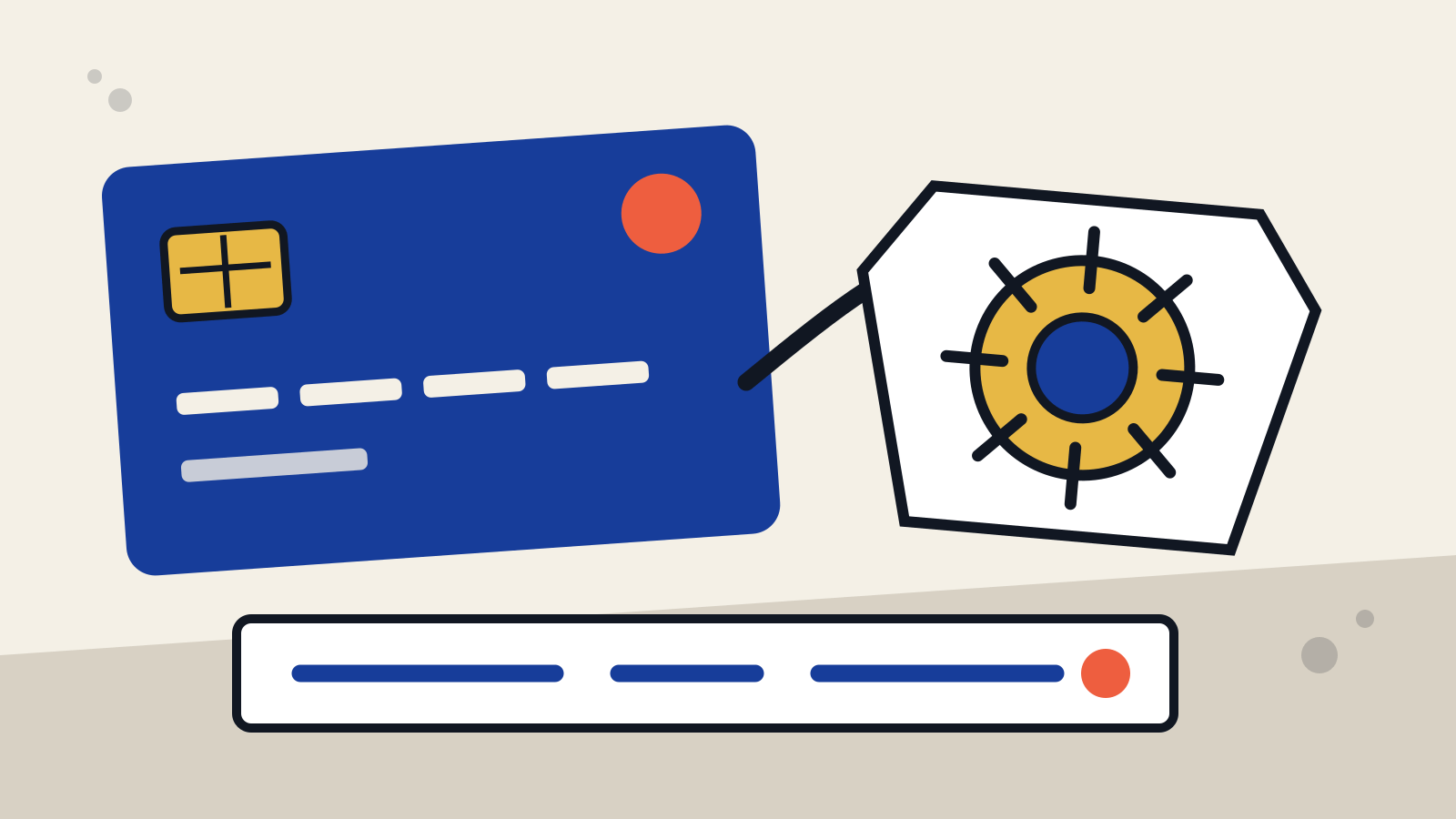
Payment tokenization replaces a card’s primary account number, or PAN, with another value used in payment processing. A well-designed payment token can be limited to a merchant, device or transaction type, so stealing it is less useful than stealing the original card number.
The token is still payment data. It can be abused within its permitted domain, and it does not remove the need for authentication, authorization, encryption or fraud controls.
The number being replaced
A payment card account is identified by a PAN: the long number printed or encoded on the card. Merchants, wallets and payment processors need a way to refer to that account during checkout and recurring billing.
Keeping the PAN in every system increases exposure. A breach of a merchant database, mobile wallet or processor integration can reveal a credential accepted across many payment environments.
EMVCo’s payment tokenisation overview describes EMV Payment Tokenisation as a way to limit risk from compromised or unauthorized use of PANs. The PAN is replaced by an alternative value that can travel through the payment process.
A token is more than a random-looking number
A payment token can resemble a card number because existing payment infrastructure expects card-shaped data. Its security comes from the relationship and rules behind it.
The token service records a mapping between the token and the underlying PAN. It can also bind the token to a domain, such as:
- one mobile device;
- one merchant or wallet;
- card-on-file use;
- a particular transaction type;
- a specific token requester.
EMVCo’s what, why and how guide gives the same practical examples: a token may be designed for one merchant, one consumer device or one transaction type.
A stolen token that is valid only for one merchant should not work as the original PAN at an unrelated checkout. That restriction reduces the value of the exposed data. It does not guarantee the token is harmless inside the domain where it remains valid.
The participants
An EMV payment-token flow can involve:
- the cardholder, whose account is represented;
- the merchant or wallet, which requests or stores a token;
- the token requester, identified to the token system;
- the Token Service Provider, or TSP, which issues and manages tokens;
- the card issuer, which owns the account relationship;
- the acquirer and payment network, which route the transaction.
EMVCo assigns TSP codes through its registration programme so TSPs issuing EMV Payment Tokens can be uniquely identified. Implementations still depend on the card network, issuer, wallet, gateway and market.
The merchant does not normally receive a table that lets it reverse every token into a PAN. Detokenization or token-to-account routing stays inside the authorized token and payment infrastructure.
What happens at checkout
A simplified network-token transaction looks like this:
- A wallet or merchant obtains a token for a card account.
- The token and its domain rules are stored for the intended use.
- At checkout, the merchant submits the token instead of the PAN.
- The payment network or token service recognizes the token and routes it toward the issuer.
- The issuer evaluates authorization against the underlying account.
- The result returns through the normal payment path.
EMVCo distinguishes network payment tokens from merchant-only vault tokens because an EMV Payment Token can pass from the point of purchase through the acquirer and payment network to issuer authorization. Merchant tokenization often replaces the PAN only inside the merchant or processor environment and may be converted back earlier.
Both approaches reduce where PANs appear. They protect different parts of the route.
Device tokens and card-on-file tokens
A mobile wallet can provision a token tied to one device. A merchant can also receive a token associated with a card saved for later purchases.
Those tokens can have separate lifecycles even when they point to the same card account. Removing a card from one phone may retire the device token without affecting a merchant’s card-on-file credential. Replacing the physical card can lead an issuer or token service to update or replace affected tokens without requiring every merchant to collect the PAN again.
The lifecycle needs explicit states: requested, active, suspended, resumed, replaced and deleted. A merchant should not infer a token’s state from the last successful purchase.
Dynamic transaction data still matters
Tokenization reduces exposure of the PAN, but a static token alone can still be copied. Payment systems commonly combine the token with transaction-specific security data and issuer authorization.
The exact value and validation rules depend on the wallet, network and payment channel. Merchants should use their gateway’s supported integration rather than inventing a client-side token format or logging the data meant to authenticate a transaction.
Tokenization and EMV 3-D Secure also solve different problems. Tokenization changes the payment credential exposed in the route. EMV 3-D Secure helps an issuer assess the person and transaction in card-not-present checkout. A transaction can use both.
Tokenization is not encryption
Encryption transforms data so someone with the correct key can recover it. Tokenization substitutes another identifier and keeps the relationship in controlled infrastructure.
That distinction affects operations:
- encrypted PANs remain PANs once decrypted;
- a merchant token may be meaningless outside its vault;
- a network token may be usable across the payment route but only within its defined domain;
- access to the token mapping is a separate trust boundary.
In practice, systems often use both. Tokens still need encryption in storage and transit, access controls, monitoring and safe key management.
What tokenization does not prevent
Payment tokenization does not prevent every kind of fraud.
It does not automatically stop:
- an attacker using a token in its allowed merchant or device domain;
- account takeover before token provisioning;
- a fraudulent merchant or compromised checkout session;
- issuer authorization errors;
- chargeback or fulfillment disputes;
- leakage of names, addresses, receipts and other customer data;
- insecure logging of authentication or transaction data.
A token also needs the same care as another payment credential. Do not expose it in analytics, support tickets or client logs merely because it is not the PAN.
Merchant implementation checks
Before launch, confirm:
- which token type the provider supplies;
- who acts as token requester and TSP;
- where the PAN first enters and where it stops appearing;
- which merchant, device and transaction domains apply;
- how token status and lifecycle updates arrive;
- how retries and recurring payments identify the intended credential;
- which logs, exports and support tools can see the token;
- how a card replacement or account closure propagates;
- how authorization results are tied to the correct order.
Test suspended, deleted and replaced tokens, not only successful payments. Track token provisioning separately from checkout authorization. A token can be issued successfully and a later purchase can still be declined.