
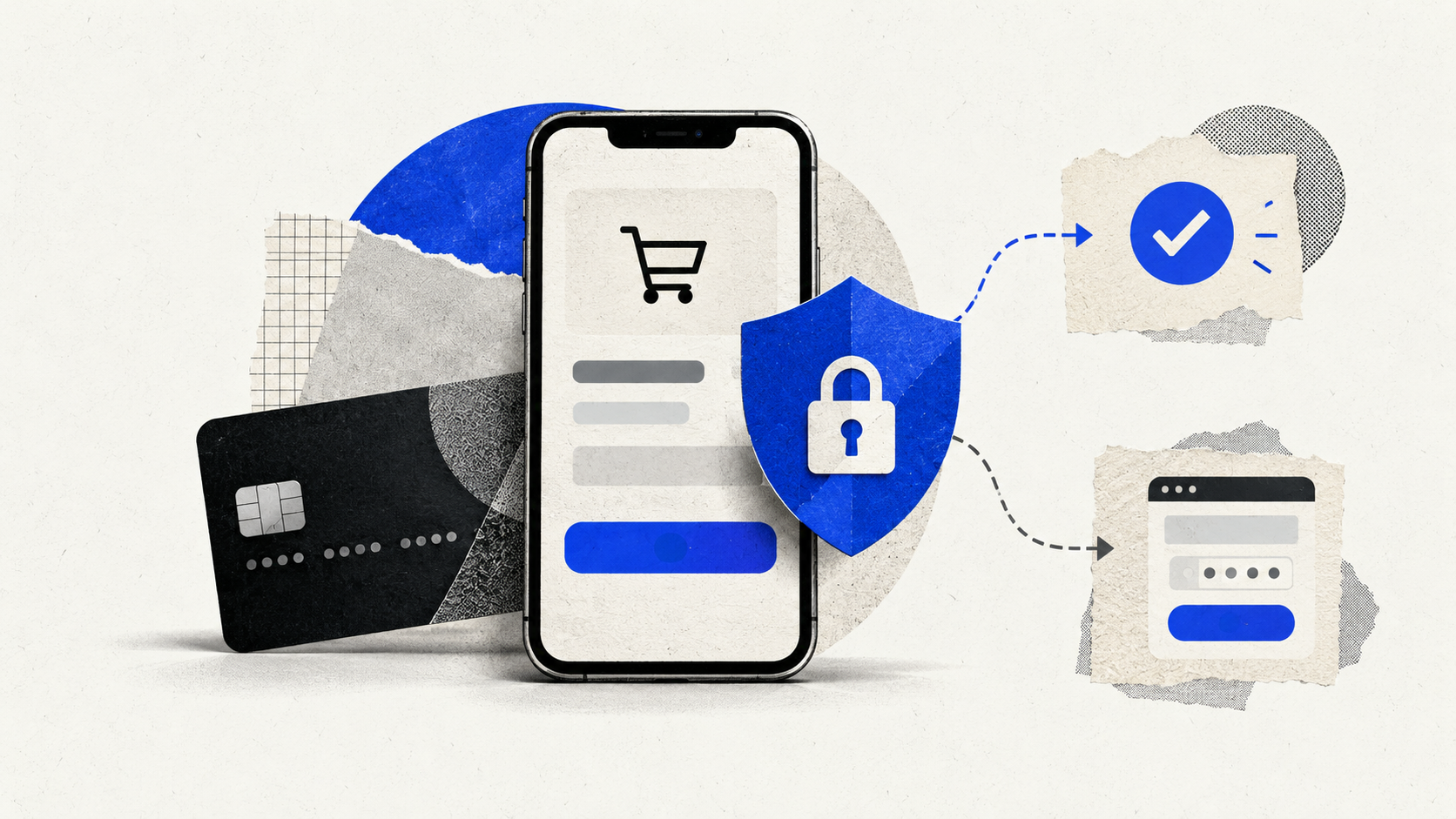
Online card checkouts sometimes finish without an extra step. Other times the bank asks for a one-time code, a biometric check or approval in its app. Those are two outcomes of the same authentication protocol: EMV 3-D Secure, usually shortened to EMV 3DS.
The protocol does not move money. It helps the card issuer decide whether the person at checkout is likely to be the legitimate cardholder. Payment authorisation still happens separately, so a successful 3DS result does not guarantee that the purchase will be approved.
The parties in a 3DS transaction
A 3DS exchange connects several systems:
- the 3DS Requestor, usually the merchant or its payment provider;
- the 3DS Server, which sends authentication messages for the requestor;
- the card network’s Directory Server, which routes messages;
- the issuer’s Access Control Server (ACS), which evaluates the request and, when needed, interacts with the cardholder;
- the 3DS Client, either the browser integration or an app using a 3DS SDK.
The names matter because they show where decisions sit. The merchant supplies transaction and device information. The issuer’s ACS evaluates that information. The cardholder only enters the flow directly when the issuer requests a challenge.
EMVCo’s March 2025 3-D Secure white paper describes two primary paths: frictionless and challenge. Implementations can differ by programme, market and protocol version, but that split is the useful starting point.
Frictionless flow: authentication without an extra screen
In a frictionless flow, the issuer evaluates the authentication request in real time and returns a result without asking the shopper to do anything else. The request can include the transaction amount and currency, merchant information, payment data, device signals, account history and other fields supported by the implementation.
The absence of a prompt does not mean that no authentication happened. It means the issuer had enough evidence to make a risk decision without step-up interaction. EMVCo says this risk-based route can reduce checkout drop-off while still giving issuers data to identify suspicious card-not-present activity.
A typical sequence is:
- The shopper confirms the purchase.
- The merchant’s 3DS Server sends an Authentication Request, or AReq.
- The Directory Server routes it to the issuer’s ACS.
- The ACS assesses the supplied context.
- The ACS returns an Authentication Response, or ARes, with the outcome.
- The merchant continues to payment authorisation using that result and the data required by its payment stack.
Merchants should treat this as a protocol outcome, not a promise of zero fraud. The quality and completeness of the data sent to the issuer can affect the decision, and the issuer applies its own models and policies.
Challenge flow: the issuer asks for more proof
A challenge begins when the ACS decides that it needs another check, or when a mandate or programme rule requires one. The ARes tells the merchant side that a challenge is requested. The browser or app then establishes a protected interaction with the ACS.
The challenge method belongs to the issuer’s authentication experience. It might be a one-time passcode, approval in a banking app, a biometric step, or another supported method. EMVCo’s challenge-flow technical overview shows the ACS instructing the cardholder and later returning the authentication result through the protocol.
This extra interaction can stop some fraudulent attempts, but it also adds a point where a legitimate customer can abandon the purchase or fail to receive a code. A good integration therefore needs more than a working modal. It needs clear loading, cancellation and retry states, plus a safe route when authentication is unavailable.
Authentication is not authorisation
3DS answers an identity and risk question. Card authorisation answers a funds and account question. An issuer can authenticate the shopper and still decline the payment because of insufficient funds, a blocked card, a transaction limit or another authorisation rule.
The reverse distinction also matters in reporting. A merchant should not combine “challenge completed,” “authentication successful” and “payment approved” into one conversion event. Separate events make it possible to see whether a problem sits in the 3DS interaction, the payment authorisation, or the merchant’s own order process.
This is similar to the distinction between a request and the money movement in our explainer on FedNow Request for Payment: one message can prepare or verify an action without being the action that transfers value.
Recurring payments and exemptions need explicit handling
Saved-card and recurring-payment flows are not simply “skip 3DS next time.” The first agreement with the cardholder, the way the transaction is flagged, regional authentication rules and the issuer’s decision all matter. EMVCo’s white paper has separate examples for recurring and instalment transactions because the message fields and authentication expectations differ from a one-off checkout.
European Strong Customer Authentication rules are one reason challenges may appear, but 3DS is used beyond Europe and does not itself determine whether a legal exemption applies. Merchants should get market-specific guidance from their acquirer or payment service provider rather than encoding a universal “low value means no challenge” rule.
What merchants should measure
A useful 3DS dashboard separates at least:
- attempts that reached the 3DS Server;
- frictionless outcomes;
- challenges requested, presented, completed and failed;
- authentication outcomes by issuer and protocol version;
- payment authorisation outcomes after authentication;
- abandonment before and during a challenge;
- technical errors and timeouts.
Measure rates alongside transaction value, country, device type and issuer, but avoid logging full payment credentials or sensitive authentication data. Averages alone can hide a broken issuer route or a mobile-only rendering problem.
Implementation checks before launch
Start with the official protocol documentation and the integration guide for the provider that actually supplies your 3DS Server or SDK. Then test the full range of outcomes: frictionless success, challenge success, challenge failure, cancellation, timeout, unavailable ACS and subsequent authorisation decline.
Confirm that:
- the merchant name and transaction details shown in a challenge are correct;
- browser and app flows return to the right order state;
- a replayed callback cannot create a second order;
- authentication results are bound to the correct transaction;
- logs contain correlation IDs but exclude cardholder secrets;
- customer support can distinguish a 3DS failure from a payment decline.
Pricing is provider-specific. EMVCo publishes the protocol specifications royalty-free, but gateways, acquirers and fraud platforms may charge for their service, authentication attempts or broader payment processing. Availability also depends on the issuer, card network, region and the versions supported by every party in the chain.
The practical takeaway
Frictionless and challenge are not competing products. They are two outcomes inside one issuer-led authentication exchange. Frictionless flow uses the supplied context to avoid interrupting the shopper. Challenge flow asks the shopper for more evidence when risk, regulation or issuer policy calls for it.
For merchants, the job is to send accurate context, implement every outcome, and keep authentication separate from payment authorisation in both code and analytics. That is how 3DS can reduce fraud without turning every checkout into an obstacle.
Questions readers ask
Does a frictionless 3DS flow mean authentication was skipped?
No. The issuer evaluated the authentication request without asking the cardholder for another step.
Does a successful 3DS result guarantee payment approval?
No. Authentication and payment authorisation are separate decisions, so the issuer can still decline the transaction.
Who decides whether a challenge appears?
The issuer’s Access Control Server evaluates the request and can ask for a challenge because of risk, policy or a legal mandate.
Sources checked 28 October 2026: EMVCo EMV 3-D Secure overview, EMV 3-D Secure White Paper v2 (March 2025), and its frictionless and challenge-flow sections.