RAG prompt injection defense begins with a simple rule: retrieved content is untrusted. Retrieval-augmented generation, or RAG, lets a language model answer with material fetched from a separate knowledge base. That makes it useful for support, search and internal assistants. It also creates a security problem: retrieved text enters the model’s context, so a document can carry instructions that compete with the application’s trusted prompt.
A document does not become safe merely because it came from a company drive or produced a relevant embedding. In a RAG system, every retrieved chunk should be treated as untrusted data until the application has checked its source, permissions and content.
Where the risk enters the RAG pipeline
NIST defines RAG as a generative AI system paired with a separate retrieval system or knowledge base. A user query is used to select relevant information, which is then provided to the model as context for its response.
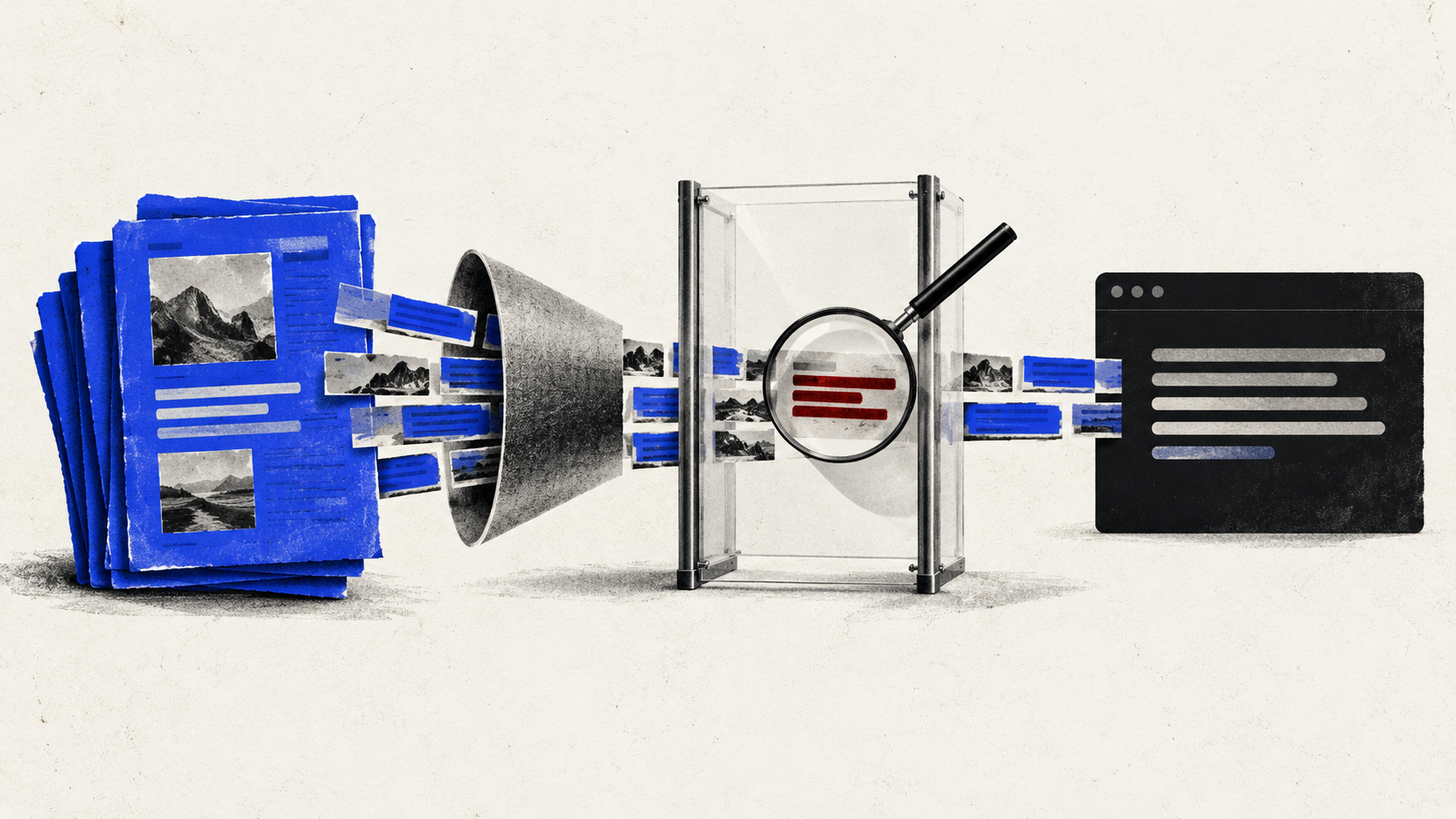
That creates a chain with several boundaries:
- A source document enters the ingestion pipeline.
- The system parses it into text and chunks.
- An embedding or another index represents those chunks.
- A user query retrieves a subset.
- The retrieved text is placed in the model context.
- The model produces an answer or requests a tool action.
- The application displays or acts on the output.
An attacker does not have to attack the model directly. They can alter a document, upload a new file, compromise a feed, manipulate metadata or place hidden text in content that a parser can see. When the poisoned chunk is retrieved, the model receives the attack as part of its working context.
OWASP classifies this as indirect prompt injection. Its LLM01:2025 guidance gives a RAG example in which a modified repository document changes the model’s output. The risk grows when the model can call tools, expose private data or make decisions rather than only draft text.
Relevance is not trust
Vector search answers “which chunks look related to this query?” It does not answer:
- who authored the document;
- whether the file was approved;
- whether it has changed since approval;
- whether the current user is allowed to see it;
- whether it contains instructions aimed at the model;
- whether the requested action is safe.
A high similarity score therefore cannot serve as a security decision. Neither can a familiar filename, a PDF extension or a location inside a shared drive. Those are useful signals, but they do not prove integrity or permission.
The same boundary question appears when choosing between a hosted and local model. Our local LLM vs API explainer focuses on where data and operating responsibility sit. RAG adds another boundary: the provenance and authority of every document sent into the context.
Control 1: establish provenance before indexing
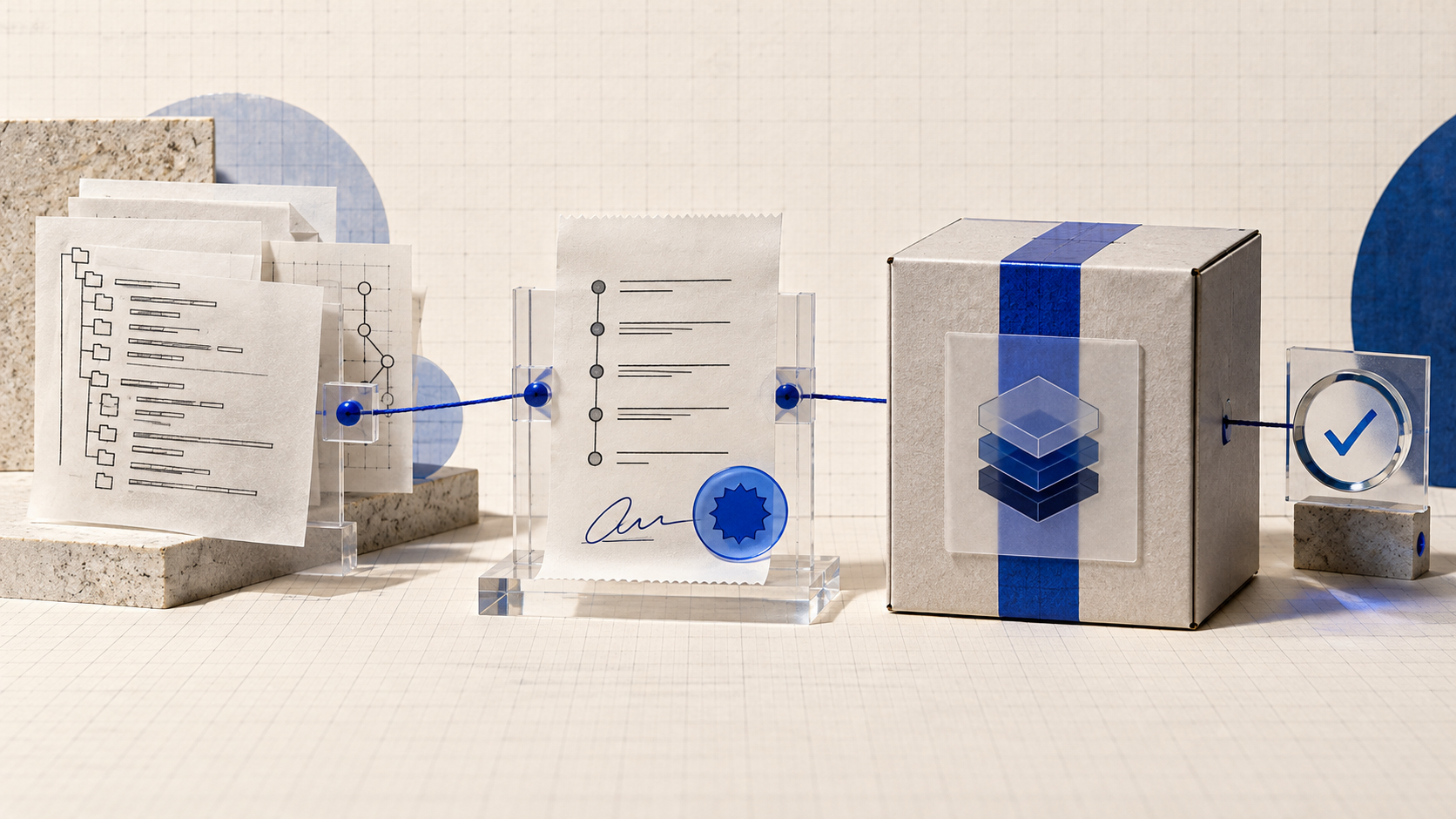
The strongest place to stop a poisoned document is before it reaches the index. Keep an inventory of approved sources and require an explicit owner for each connector. Record the source URL or repository path, uploader, ingestion time, document version and parser version.
For controlled collections, hash approved source files and protect the manifest separately from the document store. OWASP’s RAG Security Cheat Sheet recommends integrity checks and warns that a matching digest only proves consistency with an approved baseline. It does not prove the baseline content is harmless.
New connectors, bulk uploads and changes to high-impact documents should go through review. Files from user-controlled locations need stricter treatment than signed policy documents from a tightly managed repository.
Control 2: inherit access rules at retrieval time
A RAG index must not flatten permissions. Store access-control metadata with each chunk and apply it during retrieval, before any text reaches the model. Filtering the final answer is too late because the model may already have processed restricted content.
Test access rules using real role changes, document moves and revocations. Cached results and copied chunks can outlive the source permission unless the system has a deletion and re-indexing process. For multi-tenant systems, tenant identity should be part of the retrieval boundary rather than a phrase inside the prompt.
Control 3: separate data from instructions
Wrap retrieved material in explicit delimiters and tell the model that it is evidence, not executable instruction. Keep the trusted system instructions outside those delimiters. This does not make prompt injection impossible, but it gives the model a clearer boundary.
Limit the number and total size of retrieved chunks. Long, noisy contexts make it harder to preserve instruction priority and easier for an attacker to crowd out relevant material. Chunk isolation also helps: process and score chunks independently before assembling the final context, rather than letting one document silently control the whole prompt.
Scan extracted text for suspicious patterns, invisible characters and abrupt instruction-like language. A scanner should produce a risk signal for review, not a blanket claim that the remaining text is safe. Simple blocklists are easy to evade and can also reject legitimate security documentation.
Control 4: constrain what the model can do
Prompt controls matter less if the model has unnecessary authority. Give the RAG application the minimum data and tool permissions required for its task. Keep authorisation checks in deterministic application code. The model may propose an action, but the application should verify the user, object, scope and current state before executing it.
Separate read tools from write tools. Require confirmation for high-impact actions. Use short-lived, narrowly scoped credentials, and do not place reusable secrets in the context. If the assistant only needs to answer questions, it should not have a payment, deletion or account-administration tool attached “for later.”
For sensitive workflows, return citations and an answer draft, then require a human to approve the actual action. Human review is most useful when reviewers can see the retrieved evidence and the proposed change, not just a fluent final sentence.
Control 5: validate outputs and preserve evidence
Treat model output as untrusted too. Validate structured fields against a schema, encode displayed text for its destination, check URLs, and refuse tool arguments outside an allowlist. A citation should point to the exact chunk or source version used, so an investigator can reconstruct why the answer was produced.
Log query IDs, retrieved document IDs and versions, model and prompt versions, policy decisions, tool requests and final outcomes. Avoid logging secrets or entire restricted documents. The goal is enough evidence to identify which source influenced a bad answer without creating a second sensitive-data store.
Tests that reveal real weaknesses
A useful evaluation set includes more than obvious “ignore previous instructions” strings. Test:
- hidden or zero-width instructions in an otherwise normal document;
- an authorised document replaced after indexing;
- conflicting instructions split across several chunks;
- a relevant document belonging to another tenant;
- a revoked document still present in cache;
- an injection that asks the model to reveal its system prompt;
- a retrieved instruction that requests a privileged tool call;
- malformed output that passes natural-language review but violates the API schema.
Run these tests whenever the embedding model, parser, chunking rule, prompt, model or connector changes. Retrieval behaviour can shift even when application code stays the same.
What these controls cannot promise
There is no single filter that proves a chunk contains no prompt injection. Delimiters, scanners and stronger prompts reduce risk; they do not remove the model’s tendency to interpret text as instructions. Provenance also has limits: an approved source can contain unsafe content, and a compromised owner can approve a bad change.
The defensible design is layered. Control what enters the corpus, preserve document identity, enforce permissions during retrieval, mark retrieved text as untrusted, minimise model authority, validate outputs and retain evidence. If one layer misses a malicious instruction, the next layer should still prevent a private-data leak or an unauthorised action.
Questions readers ask
Does RAG prevent prompt injection?
No. Retrieval can carry an attack from a document into the model context, so RAG changes the attack surface rather than removing it.
Can a vector similarity score prove a document is trusted?
No. Similarity measures relevance, while trust depends on provenance, integrity, permissions and review.
What is the most important control for a tool-using RAG system?
Keep authorisation in application code and give the model the minimum tool and data permissions required for its task.
Sources checked 28 October 2026: NIST RAG glossary entry, OWASP LLM01:2025 Prompt Injection, and the OWASP RAG Security Cheat Sheet.